Restaurant High Dusting · Port Wentworth
Restaurant High Dusting in Port Wentworth
Remove settled grease, dust, and debris from hard-to-reach overhead surfaces with a cleaning plan built around your kitchen, access limits, and operating schedule.
Overhead Kitchen Care
High Dusting for Working Restaurant Kitchens
Restaurant High Dusting Port Wentworth addresses the buildup that ordinary floor and counter cleaning cannot reach. Dust and grease collect on exposed pipes, conduit, ceiling vents, light housings, ledges, rafters, wall tops, and the upper surfaces of equipment. Air movement and kitchen activity can disturb that residue, allowing particles to settle back into food preparation and service areas.
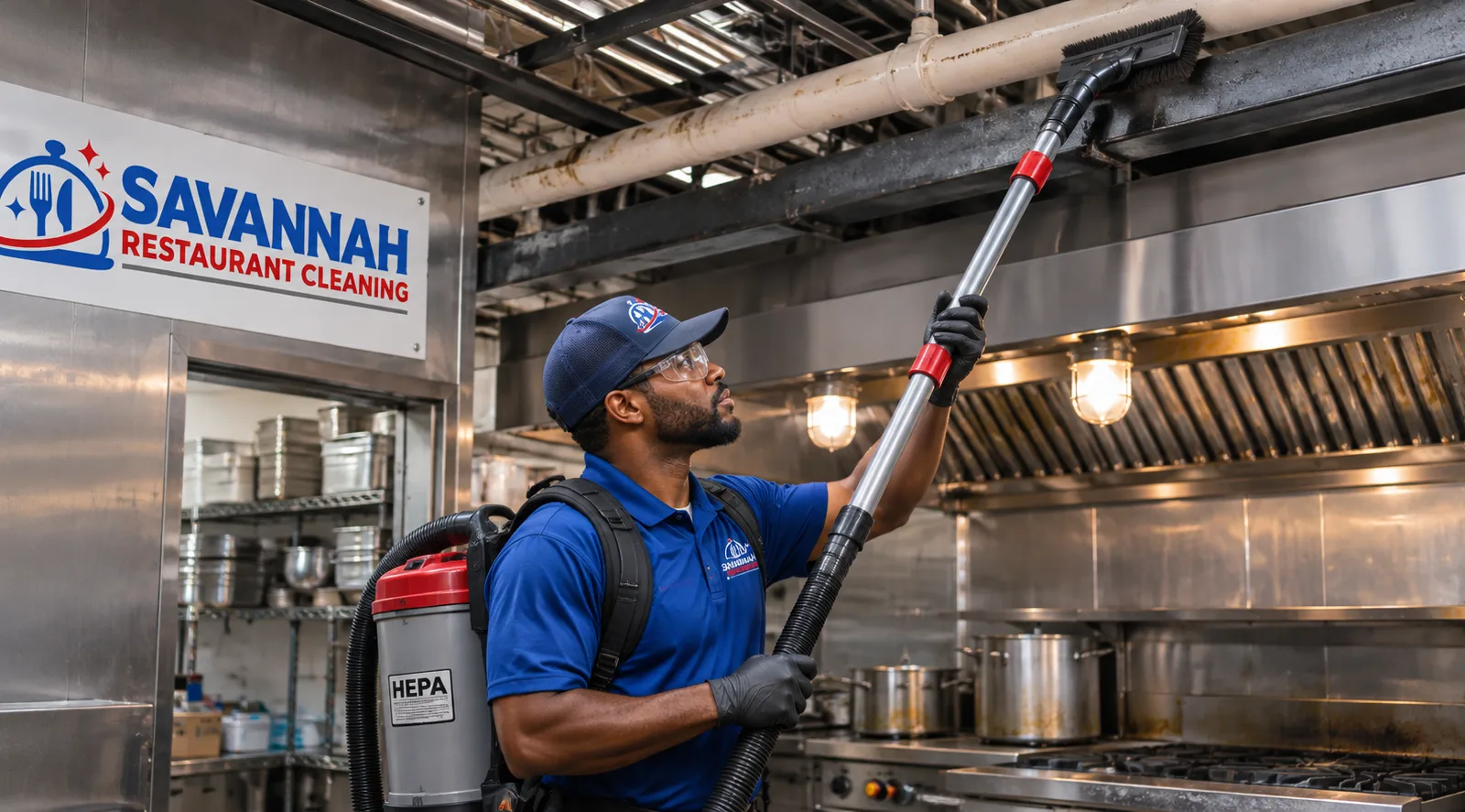
Savannah Restaurant Cleaning plans the work around the layout and condition of each restaurant. Our restaurant specialists serving Savannah, GA assess working height, equipment placement, overhead utilities, grease loading, and safe access before cleaning starts. That review determines whether the job calls for extension tools, HEPA-filtered vacuuming, controlled damp wiping, or a combination of methods.
Port Wentworth's commercial areas include restaurants serving local residents, industrial workplaces, highway travelers, and guests near the Savannah River port corridor. Those kitchens can have very different hours and ceiling configurations. A compact counter-service kitchen may need careful work around tightly spaced conduit, while a larger dining operation may have open ceilings, long pipe runs, and broad overhead ledges. The scope should match the actual structure rather than a standard checklist.
Overhead Scope
What Restaurant High Dusting Port Wentworth Covers
A high-dusting scope may include exposed ceiling structures, beams, rafters, pipes, sprinkler piping, conduit, duct exteriors, vent covers, wall caps, light housings, signs, fans, and other reachable overhead surfaces. The exact list depends on the kitchen's construction and whether an item can be cleaned safely without disassembly.
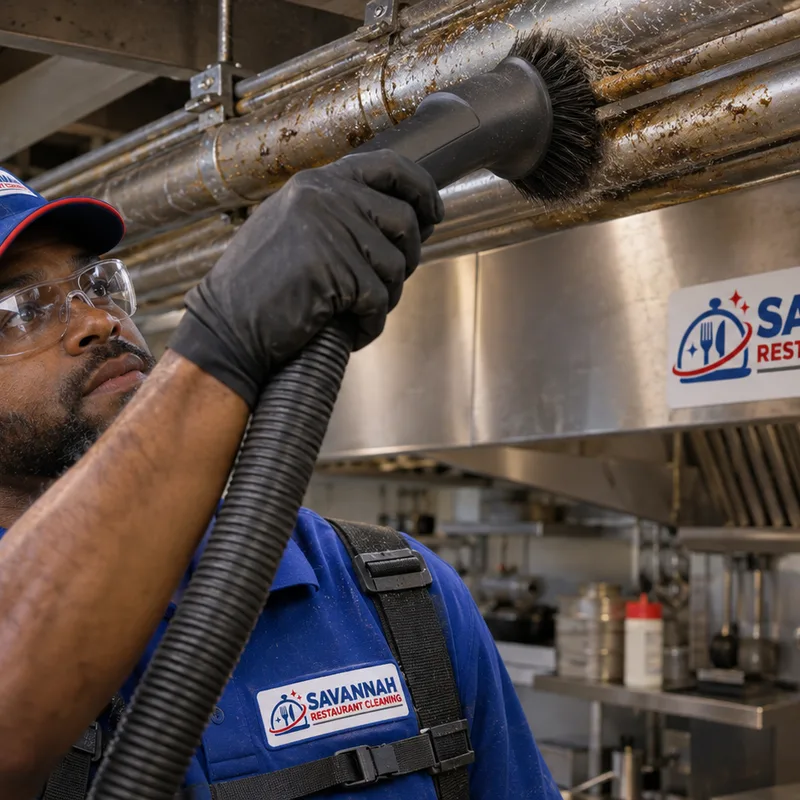
We start at the highest practical point and work downward so dislodged material does not contaminate surfaces that have already been cleaned. HEPA-filtered vacuums capture loose dry dust at the source. Greasy residue may require compatible degreasing products and controlled wiping. Sensitive equipment and food-contact surfaces are protected before overhead work begins, then surrounding areas are checked for fallen debris.
High dusting is separate from cleaning inside exhaust ducts, servicing fire-suppression systems, electrical repair, or dismantling fixtures. Heavy grease inside a hood or exhaust system requires the appropriate specialist and procedure. Defining those boundaries before work begins keeps the scope clear and prevents unsafe handling of components that need licensed service.
Cleaning Zones
Common Overhead Problem Areas
Open Ceilings and Rafters
Exposed structures provide many horizontal surfaces where airborne dust and grease can settle. Each beam, brace, and ledge must be approached without disturbing nearby utilities.
Pipes and Conduit
Pipe tops and bundled conduit are easy to miss during routine cleaning. Narrow vacuum tools and extension equipment help reach around them without unnecessary contact.
Vents, Fans, and Light Housings
Air movement can spread loose residue from dirty exterior surfaces. Cleaning methods are selected around electrical parts, guards, and manufacturer restrictions.
Equipment Tops and Wall Caps
Refrigeration units, cabinets, partitions, and wall tops can hold thick deposits outside normal sightlines. These surfaces need protection from runoff during grease removal.
Ceiling Corners and Utility Penetrations
Corners and gaps around utility runs can trap cobwebs and fine debris. Controlled removal reduces the chance of material dropping into active work zones.
Dining and Service Areas
High ledges, decorative fixtures, vents, and exposed structures outside the cook line may be included when they are part of the agreed restaurant scope.
Our Process
How the High-Dusting Process Works
- 01
Inspect and Define the Scope
We identify the overhead surfaces, estimate grease and dust loading, note ceiling height, and flag items that require specialist service or cannot be safely cleaned in place.
- 02
Plan Access and Timing
The crew determines whether extension poles, step equipment, or other access methods are suitable. Work is scheduled to limit conflict with cooking, deliveries, employees, and guests.
- 03
Protect the Work Area
Food, utensils, preparation surfaces, and sensitive equipment are removed or covered as appropriate. The immediate area is controlled so loosened debris stays within the cleaning zone.
- 04
Remove Dry Debris First
Loose dust and cobwebs are vacuumed or captured before wet products are introduced. Starting high and moving down follows the direction in which debris naturally falls.
- 05
Treat Greasy Deposits
Where the surface permits, compatible degreasing products and damp wiping are used to break down adhered residue. The crew avoids uncontrolled spraying around electrical components and food areas.
- 06
Check and Release the Area
Covers and captured debris are removed, nearby surfaces are checked, and completed areas are reviewed against the agreed scope before the kitchen returns to normal use.
Port Wentworth Scheduling
Restaurant Kitchen Cleaning in Port Wentworth Requires Careful Scheduling
High dusting is usually best performed when cooking and food preparation have stopped. The needed shutdown window depends on ceiling height, the number of overhead obstructions, grease severity, and how much equipment must be protected. A small targeted area may be completed in one visit, while a large open-ceiling restaurant may be divided into zones.
Access matters as much as square footage. Dining rooms with open floor space are often simpler to reach than compact cook lines filled with fixed equipment. Before scheduling Restaurant Kitchen Cleaning Port Wentworth, tell us about restricted hours, overnight access, alarm procedures, loading access, and any surfaces that remain hot after closing.
Coastal Georgia's warm, humid conditions can contribute to residue that clings to surfaces rather than behaving like dry household dust. Commercial kitchens add airborne cooking oils to that film. This is why aggressive dry brushing is often a poor choice for greasy overhead deposits. Source-capture vacuuming followed by controlled cleaning is less likely to scatter dirty material across the room.
Planned Maintenance
A Practical Maintenance Plan After the Initial Cleaning
The right frequency is based on what the inspection finds, not a fixed calendar applied to every restaurant. Cooking volume, menu, ceiling design, ventilation, and the amount of exposed structure all affect how quickly residue returns. Frying and charbroiling can create different overhead conditions than a low-grease preparation kitchen.
After an initial service, the completed areas can be grouped by need. Surfaces close to the cook line may require more frequent attention than dining-room beams or storage-area pipes. Some operators schedule complete high dusting periodically and use targeted visits for the heaviest zones between full services. This approach keeps the scope tied to visible conditions and operational priorities.
Routine staff cleaning should continue at reachable levels, but employees should not improvise access to high structures with unstable furniture or work around energized fixtures without proper controls. A professional plan accounts for fall exposure, chemical compatibility, electrical hazards, and the risk of dropping debris onto food-contact surfaces.
Arrange an assessment before buildup becomes harder to remove. You will receive a defined overhead scope, access plan, and scheduling recommendation based on the way your kitchen operates.
Call for a Free QuoteFrequently Asked Questions
Questions About Restaurant High Dusting in Port Wentworth
How much does restaurant high dusting cost in Port Wentworth?+
Pricing depends on ceiling height, total overhead area, grease severity, access, and the amount of protection required. Open dining-room beams are generally easier to reach than congested cook lines with fixed equipment, conduit, and hot appliances. An on-location assessment provides the information needed for a written scope and accurate price.
Can high dusting be completed while the restaurant is open?+
Kitchen high dusting should generally occur when food preparation and guest service have stopped. Overhead work can dislodge debris, and ladders or extension tools require controlled floor space. Restaurants serving the Port Wentworth port and highway corridor may have early or late operating hours, so access windows should be discussed before scheduling.
How long will the service take?+
A targeted area may take part of a shift, while a large or heavily coated open ceiling can require multiple work periods. Ceiling height, grease loading, structural complexity, and equipment protection affect duration. Zoning the work can reduce disruption when the entire restaurant is not available at once.
Does high dusting include the inside of the exhaust hood and ductwork?+
No, overhead surface cleaning does not automatically include internal hood, fan, or exhaust-duct cleaning. High dusting can address accessible exterior surfaces when they are listed in the scope. Internal exhaust systems, fire-suppression components, and repairs require their own qualified procedures.
How often should a Port Wentworth restaurant schedule high dusting?+
Frequency should be set after evaluating buildup, cooking methods, airflow, and exposed overhead surfaces. A high-volume fry kitchen may need closer monitoring near the cook line than a dining area with limited airborne grease. Periodic visual checks help determine when targeted or full service is due.
Do we need to move kitchen equipment before the crew arrives?+
Only items identified during planning need to be moved or protected before service. Fixed equipment may remain in place if safe access is available and it can be covered properly. The pre-service scope should assign responsibility for food removal, cooling hot appliances, unlocking access points, and clearing work zones.
Can you remove heavy grease from every overhead surface?+
Removal depends on the surface material, coating condition, access, and how long the residue has been present. Some painted, porous, corroded, or damaged surfaces may not tolerate strong degreasers or repeated agitation. A small compatibility check may be appropriate before treating a broad area.
Define the Overhead Scope
Plan a Cleaner Overhead Work Area
Tell Savannah Restaurant Cleaning about your ceiling layout, operating hours, and problem areas. We will outline a practical high-dusting scope for your Port Wentworth restaurant and identify what must be prepared before work starts.