Kitchen Deep Cleaning · Savannah
Kitchen Deep Cleaning in Savannah
Detailed cleaning for restaurant equipment, walk-in coolers, hard-to-reach surfaces and the areas that daily closing routines cannot fully address.
Kitchen-Specific Planning
Professional Cleaning Built Around Your Kitchen
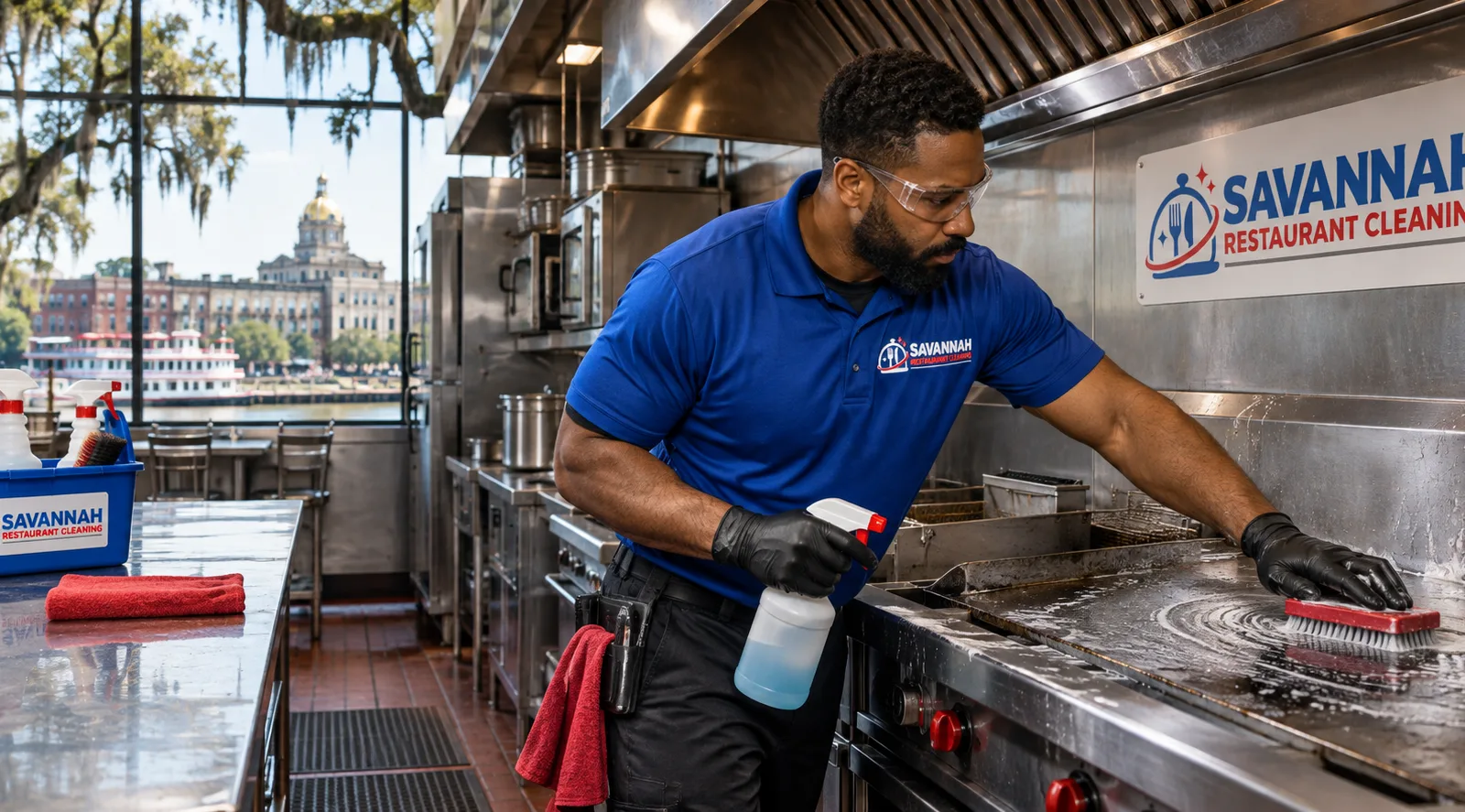
Kitchen Deep Cleaning goes beyond routine wiping, sweeping and mopping. The work targets residue that accumulates beneath equipment, along wall edges, around casters, on shelving and across other difficult surfaces. Savannah Restaurant Cleaning builds the scope around the kitchen's equipment, operating schedule, current condition and priority areas.
To reduce disruption to food preparation and service, a professional restaurant company in Savannah, GA coordinates the work carefully. That may mean cleaning after closing, dividing a large project into phases or concentrating on selected equipment and rooms. Before work begins, our crew needs to understand site access, shut-down requirements, movable equipment, sensitive surfaces and any areas that restaurant staff must prepare.
Savannah's heat and humidity can add to the demands placed on busy kitchens, especially around coolers, loading areas and frequently opened exterior doors. Restaurants in the Historic District may also operate in compact or older commercial spaces where narrow access and tight equipment placement affect the plan. In City Market and along River Street, late service hours and heavy visitor traffic can make careful scheduling as important as the cleaning itself.
Deep-Cleaning Zones
What Restaurant Deep Cleaning Services Can Cover
Cooking-Line Areas
Degreasing around ranges, fryers, ovens and prep equipment, including accessible sides, legs, casters, splash zones and floors beneath movable units. Equipment is handled according to the agreed scope and manufacturer care requirements.
Walk-In Cooler Cleaning
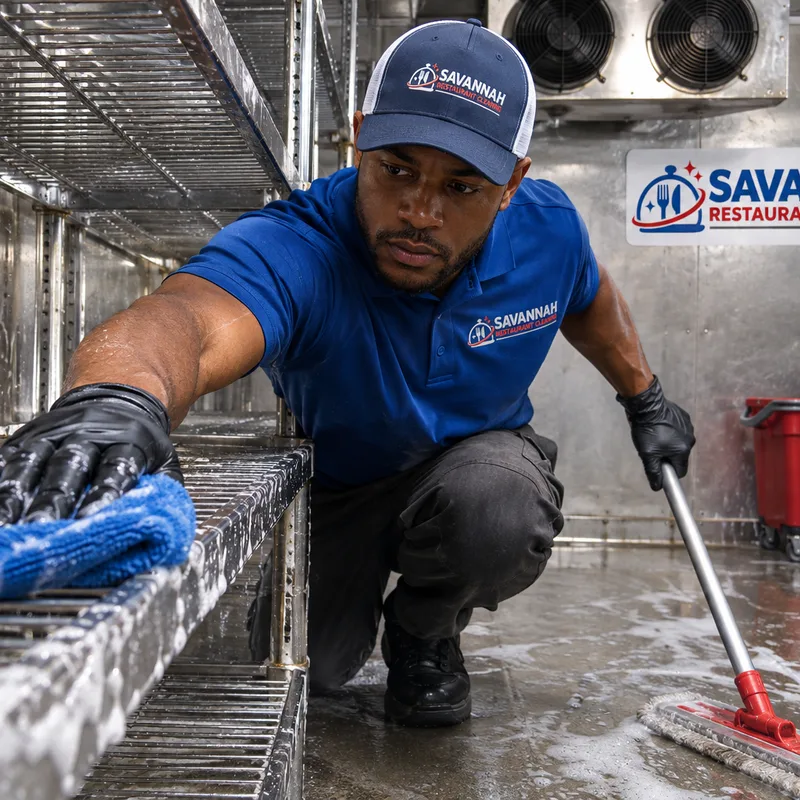
Cleaning accessible floors, walls, shelving and door-contact areas after food is removed or protected by restaurant staff. The plan accounts for temperature control, safe product handling and the need to avoid blocking airflow.
High Dusting
Removal of settled dust and debris from accessible overhead pipes, ledges, light surrounds, vents and structural surfaces. High Dusting in Savannah requires suitable access equipment and protection for preparation surfaces beneath the work zone.
Floors, Walls and Edges
Detail work addresses buildup along baseboards, grout lines, corners, floor-wall junctions and spaces behind movable equipment. Methods are selected for quarry tile, sealed concrete, stainless steel and other commercial finishes.
Prep and Storage Areas
Cleaning for accessible shelving, worktables, sinks, racks and non-food-contact storage surfaces. Food-contact areas require compatible products, correct dwell time and thorough rinsing when the product instructions call for it.
Dining-Support Spaces
Service corridors, server stations and other back-of-house areas can be included when they are connected to the kitchen deep-clean scope. Each area is identified before scheduling so labor and access needs are clear.
Cooler Cleaning
Walk-In Coolers Need a Controlled Cleaning Plan
Walk In Cooler Cleaning starts with product protection. Restaurant staff generally need to remove food from the active work zone or transfer it to approved cold storage before cleaning begins. The crew can then address accessible shelving, floors, walls, corners, door gaskets and threshold areas without putting inventory at risk.
The cooler must remain within the restaurant's required temperature controls. Doors should not be left open longer than necessary, and evaporator fans or electrical components should not receive direct spray. Standing water also needs prompt removal because it can create a slip hazard and may refreeze in freezer applications.
Heavy ice, refrigerant problems, damaged gaskets and active leaks are maintenance issues rather than cleaning tasks. Identifying those conditions during the walk-through helps keep the cleaning scope accurate and avoids treating an equipment fault as removable soil.
Our Process
Our Commercial Kitchen Deep Cleaning Process
-
01
Walk Through the Facility
The first review identifies equipment, surface materials, buildup, overhead work, water access, floor drains and restricted areas. The restaurant can also flag priority concerns and confirm which equipment may be moved.
-
02
Set the Scope and Schedule
The written plan defines included areas, exclusions, site preparation and the expected work window. For late-running restaurants near River Street or City Market, access and closing time should be settled before the crew arrives.
-
03
Prepare and Protect
Food, utensils and sensitive items are removed or protected. Equipment is cooled and shut down when required, and warning signs or temporary work boundaries help separate cleaning activity from restaurant operations.
-
04
Clean Methodically
Crews typically work from higher surfaces toward lower ones so dislodged dust and residue do not fall onto completed areas. Degreasers and other products are used at their labeled dilution and dwell time, with agitation and rinsing suited to the surface.
-
05
Review the Completed Scope
A final walk-through checks the areas listed in the plan, notes anything that could not be safely accessed and confirms that moved items are returned as agreed. The restaurant can then address any equipment maintenance identified during the work.
Detailed Equipment Care
Restaurant Detailed Cleaning for Equipment and Hard-to-Reach Areas
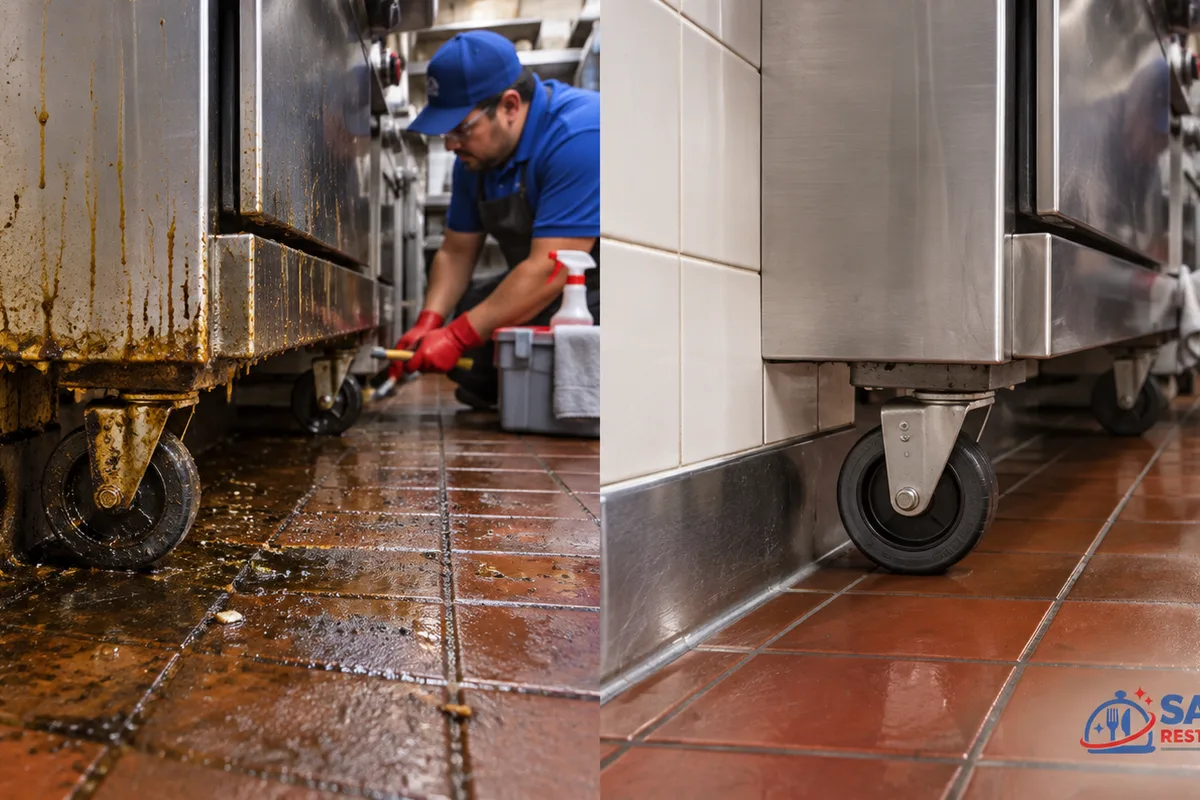
Detailed work targets buildup that ordinary closing routines may leave around equipment and edges.
Professional Restaurant Deep Cleaning depends on access. Soil commonly collects under cooking equipment, behind castered prep units, around legs and wheels, and where stainless steel panels meet floors or walls. Moving approved equipment creates access to these zones, but fixed, hard-plumbed or hard-wired units may require an equipment technician before they can be shifted.
Restaurant deep cleaners must also match the method to the material. Strong chemicals or abrasive tools can damage aluminum, painted surfaces, soft metals, labels and some flooring. Stainless steel should be cleaned with its grain where practical, while carbonized deposits may need repeated product dwell and agitation rather than aggressive scraping.
Hoods, ducts and exhaust fans involve specialized fire-safety concerns and are not automatically part of a general kitchen deep clean. Likewise, pest treatment, mold remediation, refrigeration repair and drain repair require their respective specialists. Defining these boundaries during the initial review keeps expectations clear.
Savannah Scheduling
Scheduling Restaurant Deep Cleaning in Savannah
The right timing depends on service hours, equipment cool-down and how long areas must remain unavailable. A small targeted job may fit after closing, while a full Restaurant Deep Cleaning in Savannah can require a longer overnight window or phased visits. Kitchens that operate every day may benefit from rotating deep-clean zones so one project does not take the entire back-of-house area out of use.
Scheduling deserves extra attention in compact Historic District buildings, where loading access, narrow passages and closely placed equipment can slow setup. Restaurants serving Tybee Island's seasonal visitor traffic may prefer work outside their busiest periods. In Midtown, stand-alone restaurants may have different parking and access conditions than downtown properties. These details affect crew arrival, equipment placement and the practical amount of work that fits into one visit.
Frequency should be based on cooking volume, menu, equipment arrangement and buildup rather than a fixed calendar. Frying and charbroiling usually create different cleaning demands than cold preparation. A written scope allows managers to compare completed work over time and adjust the next service around actual conditions.
Set the priorities, access requirements and work window before service so your crew receives a kitchen-specific plan rather than a generic checklist.
Call for a Free QuoteFrequently Asked Questions
Questions About Kitchen Deep Cleaning
How much does commercial kitchen deep cleaning in Savannah cost?+
Pricing depends on kitchen size, current buildup, equipment access, overhead work and the number of labor hours required. A targeted equipment zone costs less than a full kitchen that includes walk-in coolers, storage areas and high dusting. An on-site review is the soundest way to produce a written scope and project price.
How long does a restaurant deep clean take?+
A focused area may be completed during one after-hours work window, while a large or heavily soiled kitchen may require an extended shift or phased visits. In Savannah's compact Historic District properties, narrow access and tightly arranged equipment can add setup and movement time. The schedule is confirmed after the facility walk-through.
Can cleaning be scheduled after the restaurant closes?+
After-hours scheduling may be available when building access, equipment cool-down and the requested scope allow it. Restaurants with late service near River Street and City Market should confirm the actual closing routine, not only the posted dining hours, because staff cleanup and deliveries can affect crew access.
Does the restaurant need to remove food before walk-in cooler cleaning?+
Food must be removed from or securely protected outside the active cleaning zone before walk-in cooler work begins. The restaurant remains responsible for approved cold storage and temperature control. Shelving must also be cleared if all surfaces are included in the scope.
Is high dusting included with restaurant detailed cleaning?+
High dusting can be included when the overhead surfaces and access requirements are identified in advance. Pipes, ledges, vent exteriors and light surrounds may require ladders or other suitable equipment, plus protection for counters and food-contact surfaces. Hood interiors and exhaust ducts are treated as separate specialized work.
Will restaurant deep cleaners move cooking equipment?+
Movable equipment may be shifted when it is safe, disconnected as required and included in the agreed scope. Hard-plumbed gas appliances, hard-wired equipment and fixed refrigeration should not be moved by a cleaning crew unless qualified personnel have prepared them. The walk-through establishes access before pricing and scheduling.
Can a deep clean remove every stain or burned-on deposit?+
No cleaning method can guarantee removal of permanent discoloration, corrosion, etched surfaces or damage beneath heavy residue. Carbonized grease may improve through repeated treatment, but aggressive chemicals or scraping can harm the underlying finish. The crew should use the safest effective method and flag damage that cleaning cannot correct.
Plan the Work
Plan Your Savannah Kitchen Deep Clean
Tell Savannah Restaurant Cleaning about your equipment, priority areas, operating hours and access needs. We will help define a practical scope for the facility and a work window that fits restaurant operations.