
Commercial Kitchen Care · Garden City
Commercial Kitchen Cleaning in Garden City
Keep your restaurant sanitary, polished, and ready for the next service with a cleaning scope built around your kitchen, equipment, and operating schedule.
Kitchen-Specific Scope
Dependable Commercial Kitchen Cleaning Garden City Restaurants Can Schedule Around Service
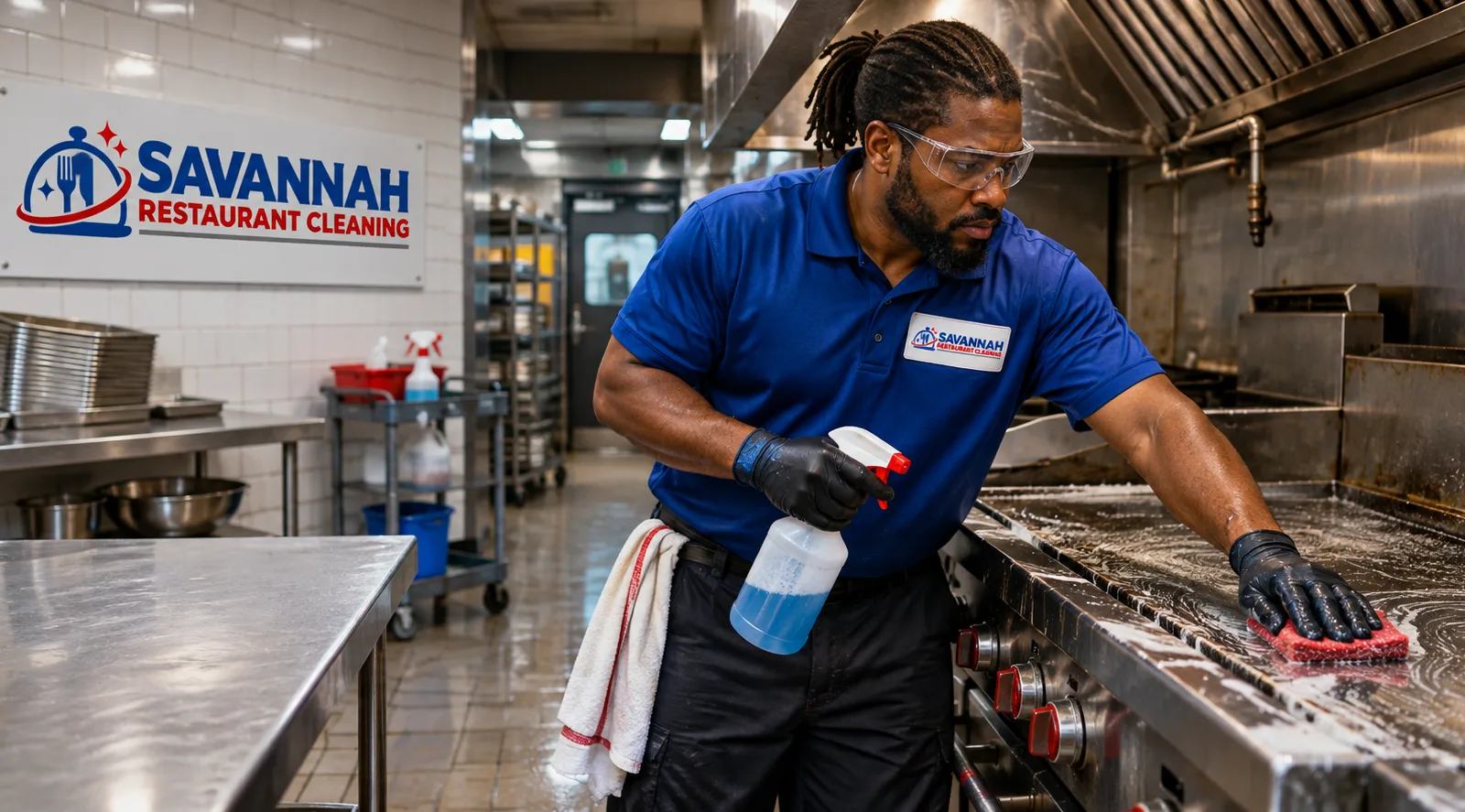
Commercial Kitchen Cleaning Garden City businesses need should address the grease, food residue, and soil that routine shift work can leave behind. Savannah Restaurant Cleaning provides detailed care for restaurant kitchens, prep areas, warewashing zones, floors, and accessible equipment surfaces. The scope is matched to the condition of the facility rather than reduced to a generic checklist.
Our restaurant specialists serving Savannah work with operators to identify priority areas, access requirements, and a practical time for service. That planning matters in Garden City, where restaurants may serve local residents, travelers using the Interstate 16 and Interstate 516 corridors, and employees connected to nearby industrial and port activity. Kitchens need cleaning that fits production hours without disrupting prep or opening routines.
Commercial cleaning also requires methods suited to food-service spaces. Degreasers need suitable dwell time, soil must be physically removed, and cleaned surfaces must be rinsed or otherwise finished according to the product label. Food, utensils, and exposed ingredients should be protected or removed before work begins. We discuss these details before the scheduled visit so managers know what to prepare and which areas are included.
Cleaning Zones
What a Commercial Kitchen Cleaning Can Cover
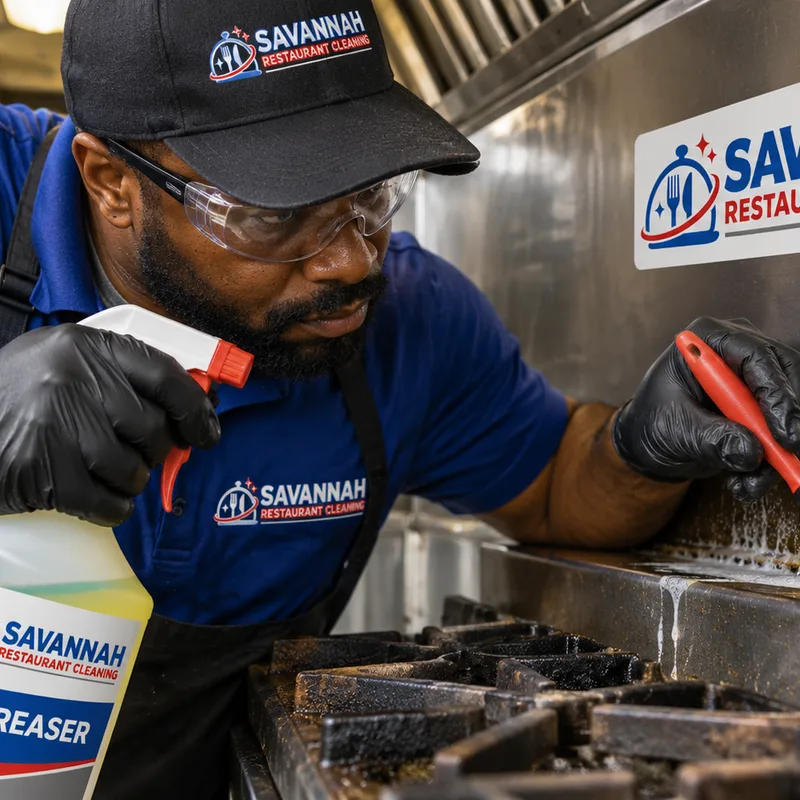
A written scope may include cooking-line exteriors, stainless steel work surfaces, splash areas, shelving, prep tables, sinks, washable walls, floor edges, and the spaces beneath movable equipment. High-contact points such as handles, switches, and cooler exteriors can also be addressed. Floors commonly require degreasing, agitation, and soil recovery rather than a quick mop pass.
The exact work depends on equipment access and manufacturer guidance. Cleaning accessible exterior surfaces is different from dismantling an appliance or servicing internal electrical, gas, refrigeration, or fire-suppression components. Exhaust ductwork, hood systems, and filters may also require a separate specialist and their own service schedule. Defining those boundaries protects the kitchen and gives the operator a clear record of what the visit covers.
Clean commercial equipment must still be inspected by restaurant staff before food production resumes. Cleaning supports a facility's sanitation program, while managers remain responsible for food-safety procedures, chemical storage, temperature controls, pest management, and required records.
Cleaning Scope
Restaurant Cleaning Garden City Operators Can Tailor to Their Facility
Cooking-Line Exteriors
Degreasing for accessible range, fryer, griddle, oven, and warming-equipment exteriors, with attention to knobs, handles, splash zones, and surrounding surfaces.
Prep and Warewashing Areas
Cleaning for prep tables, sink surrounds, shelving, washable walls, dish-area surfaces, and other approved nonporous surfaces included in the scope.
Floors and Edges
Mechanical or manual agitation can loosen greasy buildup around floor edges, beneath movable equipment, and along hard-to-reach transitions.
Cooler and Storage Exteriors
Accessible doors, handles, gaskets, shelving exteriors, and storage-area surfaces can be cleaned without disturbing protected inventory.
Detail Work
Casters, equipment legs, wall junctions, base areas, and other overlooked spots receive focused attention when access permits.
Scheduled Maintenance
Recurring visits can target areas that accumulate soil between daily cleanings, with frequency based on cooking volume, menu, and operating hours.
Our Process
How We Plan the Work
-
01
Review the Kitchen
We discuss the facility layout, type of cooking, problem areas, equipment that can be moved, and any restricted surfaces. Photos or an on-site review may be useful when the kitchen has heavy buildup or complex access.
-
02
Set a Written Scope
The proposed work identifies included surfaces, exclusions, expected preparation, service timing, and factors that may affect the price. Managers can confirm priorities before cleaning starts.
-
03
Prepare and Protect
Food and portable utensils are removed or protected as agreed. The crew organizes chemicals and tools, observes product labels, and separates cleaning materials as appropriate for the work area.
-
04
Degrease and Detail
Selected areas are treated with suitable products, allowed the required dwell time, agitated where needed, and wiped, rinsed, or recovered using the planned method.
-
05
Complete a Final Review
The cleaned areas are checked against the scope. The manager can review the work and note any maintenance concerns before the kitchen returns to normal use.
Garden City Scheduling
Built for Garden City's Operating Conditions
Garden City sits next to Savannah's major freight and industrial corridors, including areas near the Port of Savannah. Restaurants serving shift workers, commuters, and highway traffic can experience concentrated service periods that leave little room for intrusive cleaning during production. An after-hours or planned off-day appointment may give crews safer access to floors and equipment gaps.
Coastal Georgia's warm, humid conditions also make moisture control important. Standing water should be recovered, floor drains must remain unobstructed, and surfaces need enough time to dry before traffic resumes. That is especially relevant in warewashing areas, behind cooking equipment, and around floor-to-wall junctions.
A restaurant near Augusta Road may have different access and scheduling needs than a kitchen closer to the Main Street municipal area or the Dean Forest Road commercial corridor. We account for loading access, closing times, equipment density, and the amount of preparation required. The result is a practical plan tied to the facility rather than a one-size-fits-all appointment.
Sanitation Responsibilities
Daily Sanitation and Professional Deep Cleaning Have Different Jobs
Restaurant employees still need to complete daily and shift-based cleaning tasks. Food-contact surfaces require cleaning and sanitizing at the intervals required by the operation's food-safety procedures, and spills should be handled promptly. Professional deep cleaning supplements that work by addressing broader buildup, difficult access, and labor-intensive areas that are easy to postpone during service.
Cleaning and sanitizing are separate steps. Cleaning removes grease, food residue, and other soil. Sanitizing follows cleaning on applicable food-contact surfaces and uses an approved product at its labeled concentration and contact time. Applying sanitizer over visible soil does not replace cleaning.
The Chatham County Health Department handles food-service permitting and inspections in the county. A professional cleaning visit does not guarantee an inspection result, but it can help operators maintain cleaner physical conditions and make neglected areas easier to monitor. Managers should follow current health-department requirements, equipment instructions, Safety Data Sheets, and chemical labels when building their sanitation program.
Share your kitchen layout, operating hours, and problem areas so Savannah Restaurant Cleaning can prepare a clear scope that fits your restaurant's workflow.
Call for a Free QuoteFrequently Asked Questions
Questions About Restaurant Cleaning in Garden City
How much does commercial kitchen cleaning cost in Garden City?+
Commercial kitchen cleaning is priced according to kitchen size, soil level, equipment density, access, and the work included. A light maintenance visit costs less than a first deep cleaning with heavy grease around a cooking line. After-hours access, equipment movement, floor treatment, and specialty areas can also affect labor. Savannah Restaurant Cleaning confirms the exact price after reviewing the facility and agreeing on a written scope.
Can cleaning be scheduled after the restaurant closes?+
Yes, service can be planned around closing hours or another period when the kitchen is out of production, subject to availability. Garden City restaurants serving traffic near the interstate and port corridors may have late or irregular rush periods, so the crew needs an accurate shutdown window. The kitchen should allow enough time for preparation, cleaning, drying, and a manager's review before production resumes.
How often should a Garden City restaurant schedule deep cleaning?+
The right frequency depends on cooking volume, menu, equipment layout, and how quickly grease accumulates. Frying and high-volume cooking generally create different needs than light assembly or beverage service. A first visit can establish the condition of floors, walls, equipment exteriors, and hard-to-reach areas. Managers can then choose a recurring interval that supports daily employee cleaning without waiting for heavy buildup.
Do you clean behind and beneath commercial kitchen equipment?+
Accessible spaces behind and beneath movable equipment can be included when the equipment can be moved safely and the scope allows it. Restaurant staff should identify gas, electrical, water, refrigeration, or fire-suppression connections before work begins. Heavy, fixed, or connected appliances may require an authorized technician or restaurant representative to disconnect and reposition them.
Does the service include exhaust hoods and ductwork?+
Exhaust hood, filter, fan, and duct cleaning should be identified separately because those systems may require specialist access, documentation, and methods. A general kitchen-cleaning scope can address accessible surrounding surfaces without implying that the full exhaust system has been serviced. Operators should maintain exhaust and fire-suppression systems according to applicable codes, inspection requirements, and vendor recommendations.
What should our staff do before the cleaning crew arrives?+
Staff should remove or securely protect exposed food, utensils, small appliances, and sensitive supplies from the agreed work areas. They should also identify restricted surfaces, chemical sensitivities, alarms, shutoffs, and equipment that cannot be moved. Clear access through doors and loading areas is particularly useful for Garden City facilities with compact service entrances or shared commercial access.
Can you clean while food preparation is underway?+
Deep cleaning is usually safer and more effective when the targeted area is out of production. Active food preparation limits equipment access and increases the risk of chemical mist, loosened soil, or cleaning water reaching exposed items. If part of the facility must remain active, the work areas and traffic paths need firm separation, and the approved plan should protect food and food-contact materials.
Will professional cleaning help with a health inspection?+
Professional cleaning can improve the physical condition of included areas, but it cannot guarantee an inspection outcome. Chatham County inspections consider food handling, temperatures, employee practices, pest control, sanitation, and facility conditions. Operators remain responsible for correcting cited issues and following current requirements. A clear cleaning scope can help address grease, residue, and difficult-access areas before they become recurring maintenance problems.
Plan Your Service
Put a Cleaner Kitchen on the Schedule
Tell Savannah Restaurant Cleaning about your equipment, operating hours, and highest-priority areas. You will receive a practical scope built around the way your Garden City kitchen actually runs.