
Restaurant Care · Savannah
Restaurant Cleaning Services
Detailed recurring cleaning for dining rooms, bars, restrooms, floors, and back-of-house areas, scheduled around your operating hours.
Restaurant-Specific Scope
Reliable Cleaning Built Around Restaurant Operations
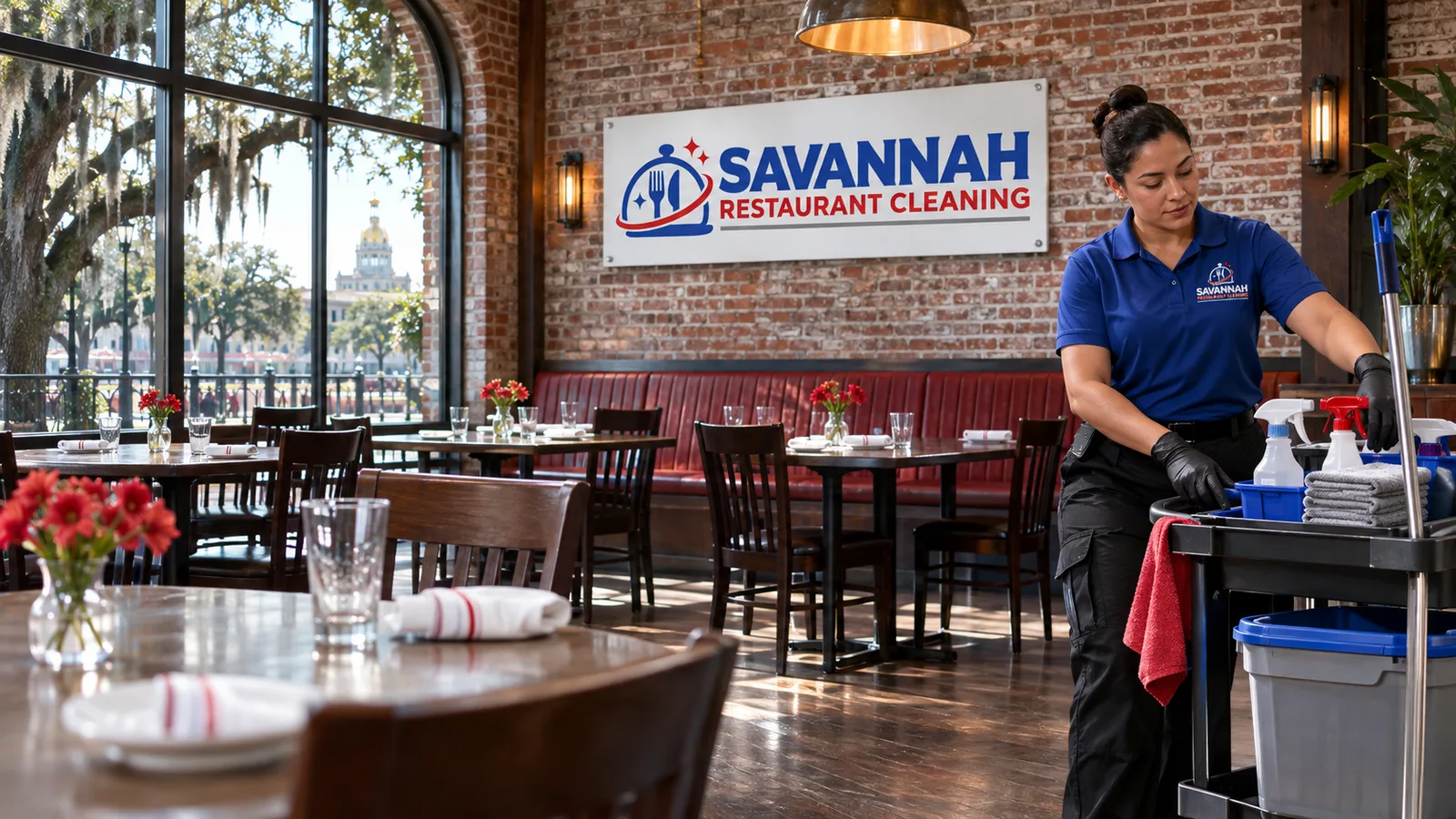
Restaurant Cleaning Services should leave the entire establishment ready for staff and guests without disrupting reservations, prep, or closing duties. Savannah Restaurant Cleaning develops a written scope based on your floor plan, service schedule, surface materials, and division of responsibility between restaurant staff and the cleaning crew.
Our work can cover front-of-house presentation, restrooms, bars, floors, high dusting, and agreed back-of-house areas. For each visit, an experienced restaurant team in Savannah, GA plans around access, alarm procedures, key control, and the time needed for cleaned floors and surfaces to dry before employees return.
That planning matters in Savannah restaurants. Humid coastal conditions can make tracked soil and moisture more noticeable at entrances, while pollen and airborne dust collect on ledges, vents, and decorative fixtures. Restaurants near the pedestrian traffic of River Street may need close attention at entrances and floors. Historic District dining rooms can contain older wood, masonry, and detailed trim that require surface-appropriate methods. In City Market, patios and frequent guest turnover can add outdoor debris to the cleaning load. The scope should reflect the actual room, not a generic checklist.
Cleaning Zones
Complete Restaurant Cleaning Services
Dining Area Cleaning
Tables, chair frames, booths, partitions, ledges, host stations, and other agreed touchpoints are cleaned without leaving sticky residue. Restaurant dining room cleaning can also include spot cleaning on glass and careful attention around table bases and corners.
Front Of House Cleaning
Restaurant front of house cleaning in Savannah can cover entrances, waiting areas, service stations, interior glass, doors, baseboards, and visible fixtures. The crew follows a repeatable checklist so opening staff can quickly inspect the space.
Restaurant Bar Cleaning
Bar cleaning addresses counters, stools, rails, footrests, shelving exteriors, mirrors, and accessible floor edges. Product handling, taps, glassware, and food-contact equipment remain the restaurant's responsibility unless they are expressly included in the written scope.
Restaurant Floor Cleaning
Floor care is matched to the material and soil level. Vacuuming, damp mopping, machine scrubbing, spot treatment, and periodic detail cleaning may be used on tile, resilient flooring, sealed concrete, carpet, or properly finished wood.
Restroom Cleaning
Restaurant restroom cleaning in Savannah includes toilets, urinals, sinks, counters, mirrors, partitions, dispensers, floors, and touchpoints. Consumable restocking and supply responsibilities can be documented before recurring service begins.
Back Of House Cleaning
Restaurant back of house cleaning in Savannah can address agreed non-food-contact areas such as employee corridors, break areas, storage-room floors, and accessible surfaces. Cooking equipment, exhaust systems, and regulated hood work require a separately defined specialty scope.
Detailed Care
High Dusting and Detail Work Guests Notice
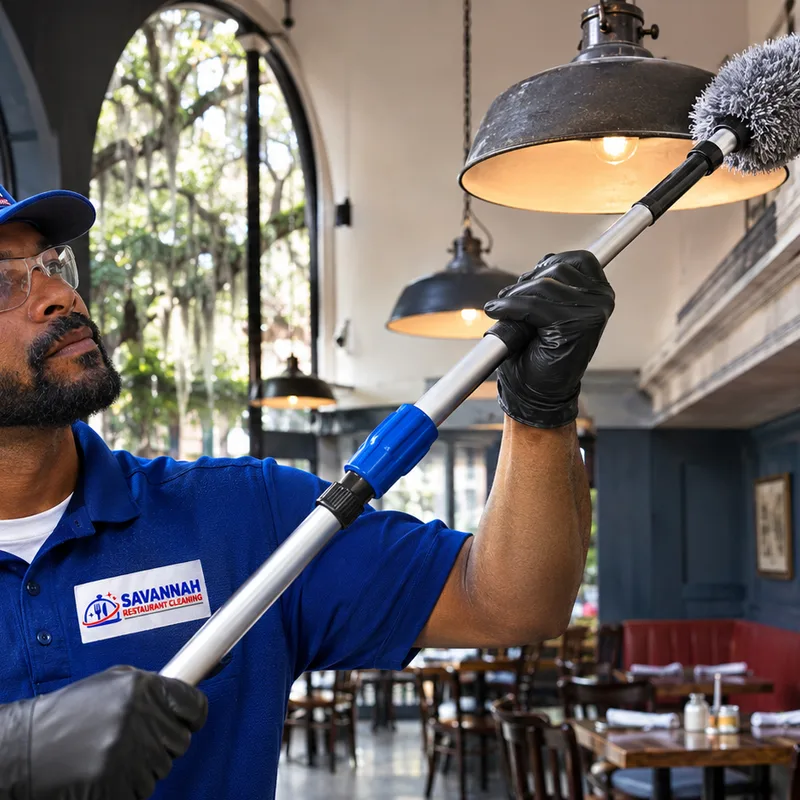
High dusting targets areas that routine wiping cannot reach safely, including the tops of partitions, vents, pipes, beams, pendant fixtures, wall décor, and tall ledges. The exact list depends on ceiling height, safe access, and whether delicate objects or active equipment are present. A site review identifies what requires extension tools, a ladder, or separate access arrangements.
Dust should be removed before lower surfaces and floors are cleaned. This top-to-bottom sequence keeps settled debris from undoing completed work. Microfiber tools and HEPA-filtered vacuuming may be used where appropriate to capture dry soil rather than spread it through the dining room. High areas are then assigned a practical rotation based on how quickly dust and residue return.
Savannah's pollen periods and year-round humidity can increase the attention needed around entrances, vents, ceiling fans, and exterior-facing glass. Restaurants with open ceilings, decorative millwork, or large bar displays may benefit from scheduled detail visits in addition to nightly or weekly maintenance.
Our Process
How Recurring Restaurant Cleaning Works
-
01
Walk Through the Restaurant
We review the dining room, bar, restrooms, entrances, floors, and requested back-of-house spaces. The walkthrough records surfaces, access limits, sensitive areas, storage locations, and tasks already handled by employees.
-
02
Set the Scope and Frequency
Each task is assigned a frequency, such as every visit, weekly, or periodically. We also document operating hours, preferred service windows, alarm instructions, supply responsibilities, and areas that require manager approval.
-
03
Prepare a Site-Specific Checklist
The checklist identifies rooms, tasks, exclusions, and inspection points. It can separate routine dining area cleaning from periodic floor work, high dusting, or deep detail cleaning so expectations remain clear.
-
04
Clean in a Logical Sequence
The crew generally works from high areas to low surfaces and from cleaner zones toward heavier soil. Restrooms use dedicated, color-coded tools to reduce cross-contamination, and wet-floor controls remain in place while floors dry.
-
05
Inspect and Adjust
Completed work is checked against the agreed scope. If reservation patterns, patio use, seasonal traffic, or the restaurant layout changes, the checklist and frequency can be revised.
Floor Care
Restaurant Floor Cleaning by Surface and Soil
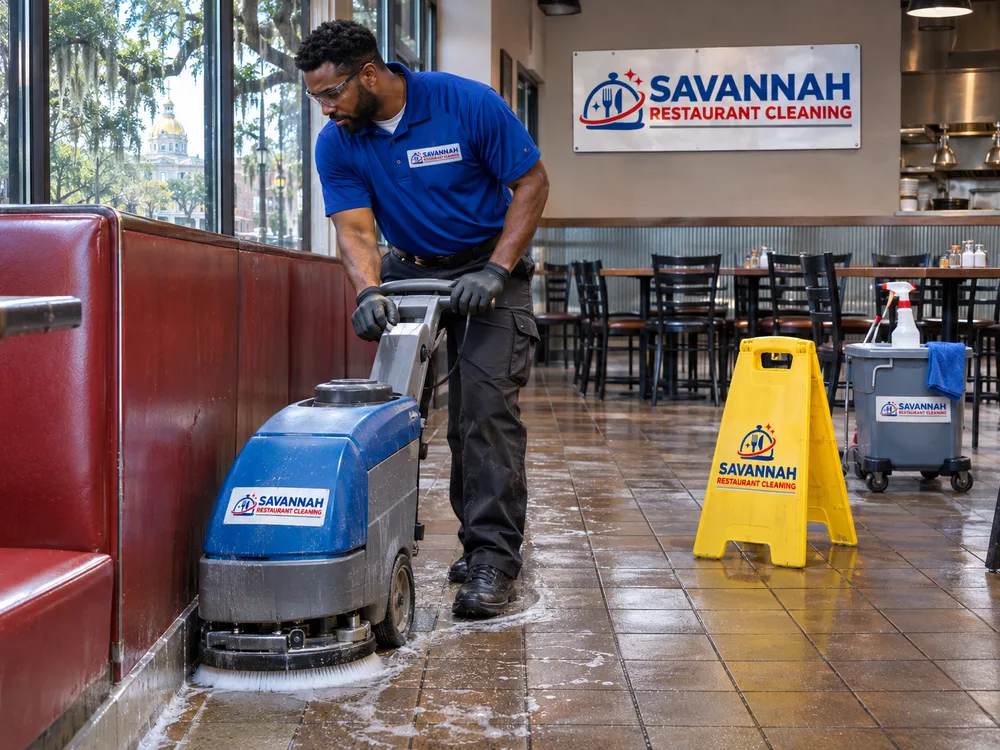
Restaurant Floor Cleaning requires more than applying the same chemical throughout the building. Greasy soil near service routes differs from beverage residue at a bar or grit tracked through an entrance. The process must account for the floor manufacturer's guidance, finish condition, slip concerns, and available drying time.
Routine care can include vacuuming, sweeping, damp mopping, and autoscrubbing where the layout allows it. Edge work around booths, bars, and equipment helps prevent dark buildup that open-floor passes miss. Carpeted dining areas may need spot treatment and periodic extraction, while grout lines often require focused agitation. Wood and resilient floors need compatible chemistry and controlled moisture.
Heavy grease near cooking equipment can require degreasing, dwell time, and repeated recovery. These tasks must be coordinated with food handling and equipment shutdown. Hood, duct, and exhaust-system cleaning are specialized work and should never be treated as ordinary janitorial cleaning.
Defined Responsibilities
A Clear Scope for Front and Back of House
A useful cleaning agreement states exactly who handles each task. Dining Area Cleaning may include tables and seating exteriors, but resetting tableware can remain with opening staff. Restaurant Bar Cleaning may include counters and exterior surfaces, while bartenders retain responsibility for taps, glassware, and beverage equipment. Back-of-house cleaning may cover floors and common areas without including cooking equipment or food-contact sanitation.
Sanitation and general cleaning are related but different. Cleaning removes soil and residue. Sanitizing applies an appropriate product to a previously cleaned surface for the required contact time. Restaurant operators remain responsible for food-safety procedures and compliance with applicable Chatham County and Georgia requirements. When food-contact surfaces are included, the product, method, responsibility, and final readiness check should be documented.
Restaurant Front Of House Cleaning in Savannah also needs a plan for patios and entrances. Outdoor dining near River Street or City Market can bring in grit, leaves, drink spills, and moisture. A practical scope distinguishes indoor work from weather-dependent outdoor tasks and identifies where furniture must be moved before cleaning begins.
A walkthrough turns general cleaning needs into a written room-by-room scope, practical service schedule, and clear division of responsibilities.
Call for a Free QuoteFrequently Asked Questions
Restaurant Cleaning Questions
How much do Restaurant Cleaning Services cost in Savannah?+
Restaurant cleaning is usually priced after a walkthrough because square footage alone does not show the workload. Cost depends on service frequency, dining-room capacity, restroom count, floor materials, bar areas, soil levels, access, and whether high dusting or periodic floor care is included. Late-night access, key control, and short cleaning windows can also affect labor. Savannah Restaurant Cleaning confirms the exact price after reviewing the establishment and preparing a written scope.
Can cleaning be scheduled after closing or before opening?+
Yes, recurring cleaning can be planned for an agreed window after closing, before opening, or during another low-traffic period. The schedule must allow enough time for the full checklist and for floors to dry before employees enter. Access instructions, alarms, keys, manager contacts, and lock-up procedures are documented before the first visit.
What is included in restaurant restroom cleaning in Savannah?+
A typical restroom scope covers toilets, urinals, sinks, counters, mirrors, partitions, dispensers, floors, and frequent-touch surfaces. Supply restocking can be included when the restaurant provides consumables and identifies storage locations. The checklist should also state how spills, plumbing leaks, blocked fixtures, or damaged dispensers are reported to management.
Do you clean commercial kitchens and cooking equipment?+
Agreed back-of-house common areas and floors can be included, but cooking equipment and food-contact sanitation require a specific written scope. Hood, duct, and exhaust-system cleaning are specialty services and are not interchangeable with routine janitorial work. The walkthrough identifies exclusions and assigns responsibility for each kitchen task.
How often should a restaurant schedule high dusting?+
The right high-dusting frequency depends on ceiling design, ventilation, cooking residue, open doors, and the amount of visible accumulation. Open ceilings, ceiling fans, pendant fixtures, and decorative ledges may need a planned rotation beyond routine cleaning. Savannah pollen and moisture near entry points can also increase buildup, so the schedule should be adjusted after early inspections.
Can floor cleaning be performed without disrupting restaurant service?+
Yes, floor work can be divided into routine maintenance and periodic detail cleaning during closed or low-traffic hours. The plan should account for furniture movement, chemical dwell time, machine access, wet-floor controls, and drying. Historic District restaurants with older wood, masonry, or mixed flooring may require separate methods within the same dining room.
Can the cleaning checklist change during busy seasons or special events?+
Yes, the checklist and frequency can be revised when reservations, patio use, private events, or operating hours change. Temporary adjustments may add entrance care, restroom checks, bar detail work, or an extra floor service. The revised tasks and dates should be approved before the schedule changes.
Plan Your Service
Put a dependable restaurant cleaning plan in place
Tell Savannah Restaurant Cleaning about your rooms, surfaces, operating hours, and current trouble spots. We will help define a practical scope that keeps guest areas and agreed back-of-house spaces ready for the next service.