Restaurant Restroom Care · Pooler
Restaurant Bathroom Cleaning in Pooler
Keep guest restrooms sanitary, stocked, and ready for every shift with a cleaning plan built around your operating hours.
Pooler Restaurant Restrooms
Reliable Restaurant Bathroom Cleaning Pooler Businesses Can Schedule Around Service
Restaurant Bathroom Cleaning Pooler businesses depend on should address more than what guests can see. Toilets, urinals, sinks, faucets, partitions, dispensers, doors, and floors all collect soils through a busy shift. A consistent routine controls odors, removes buildup, and gives managers a clear standard for opening, closing, and recurring cleaning.
Savannah Restaurant Cleaning plans the work around restaurant traffic rather than forcing a generic office-cleaning routine into a food-service setting. We assess fixture count, restroom layout, floor material, operating hours, and expected use before defining the scope. Our team at a restaurant company Savannah homeowners rely on brings the same practical attention to scheduling and accountability when serving commercial clients in Pooler.
Pooler's restaurant traffic is shaped by several distinct commercial areas. Restaurants near Tanger Outlets Savannah may need cleaning timed around retail peaks, while locations near Savannah/Hilton Head International Airport can experience traffic tied to flights and travel schedules. Businesses along Pooler Parkway and the Interstate 95 corridor may also serve diners across long operating windows. These conditions make flexible timing and documented duties more useful than a one-size-fits-all visit.
Restroom Cleaning Scope
What a Restaurant Restroom Cleaning Visit Covers
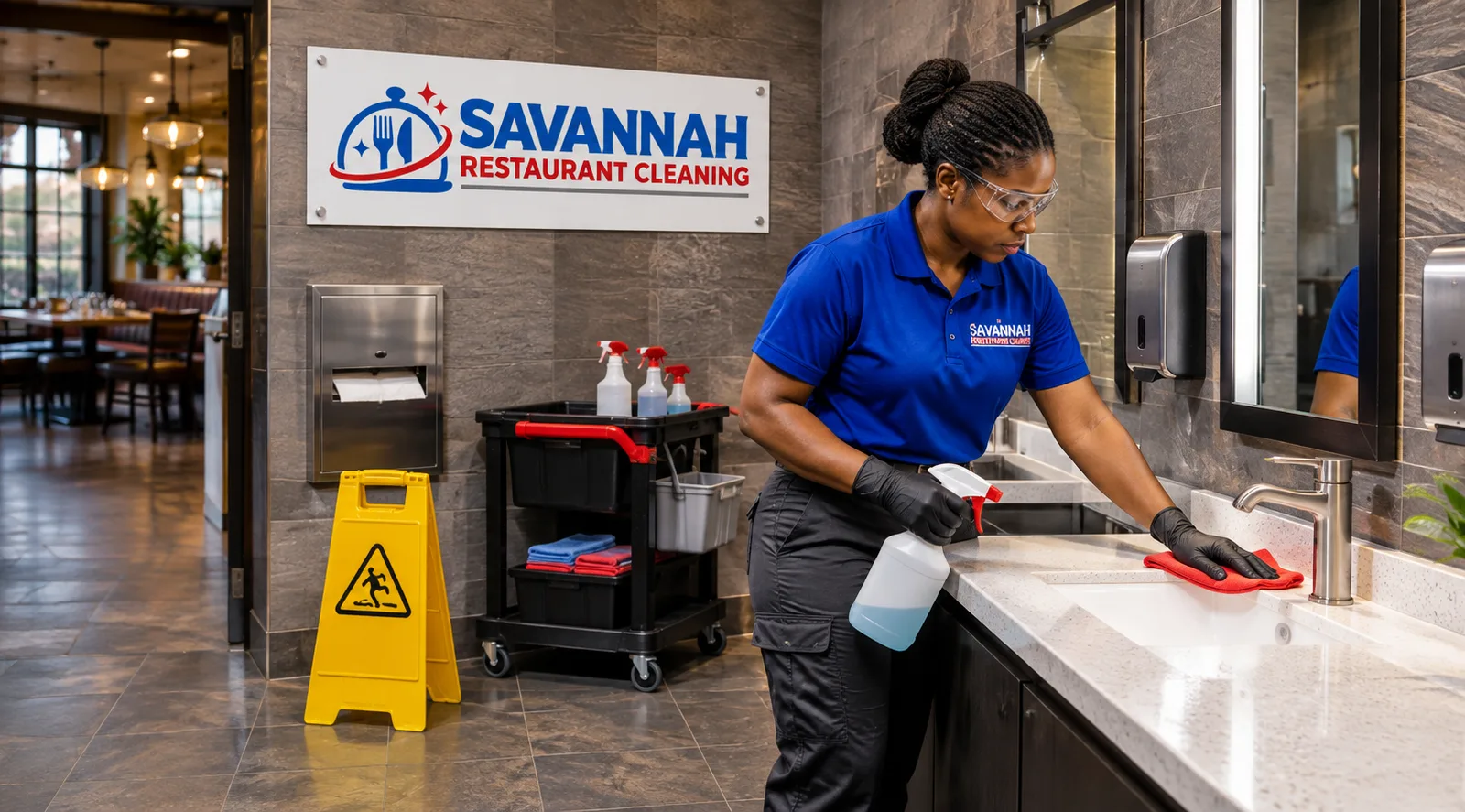
A defined scope starts with high-contact surfaces. Door handles, stall latches, flush controls, faucet handles, soap dispensers, baby-changing surfaces when present, and accessible grab bars are cleaned and disinfected with attention to the product's label directions. Disinfectants need the labeled contact time to work, so spraying and immediately wiping is not an adequate process.
Technicians clean toilet bowls and urinals, wipe exterior fixture surfaces, scrub sinks, polish mirrors, remove trash, and clean partitions and ledges. Floors are swept or vacuumed before damp mopping so loose debris does not turn into residue. Corners, floor edges, and the areas behind fixtures receive scheduled detail work because routine traffic cleaning may not fully reach them.
Supply checks can be included for toilet tissue, hand soap, paper towels, liners, and other customer-provided consumables. Staff also report leaking fixtures, loose dispensers, damaged partitions, or recurring drain odors observed during service. Cleaning does not replace plumbing or pest-control work, but prompt reporting helps a manager route the issue to the right trade.
Guest-Ready Standards
Cleaning Priorities for Guest-Ready Restrooms
Fixture Cleaning
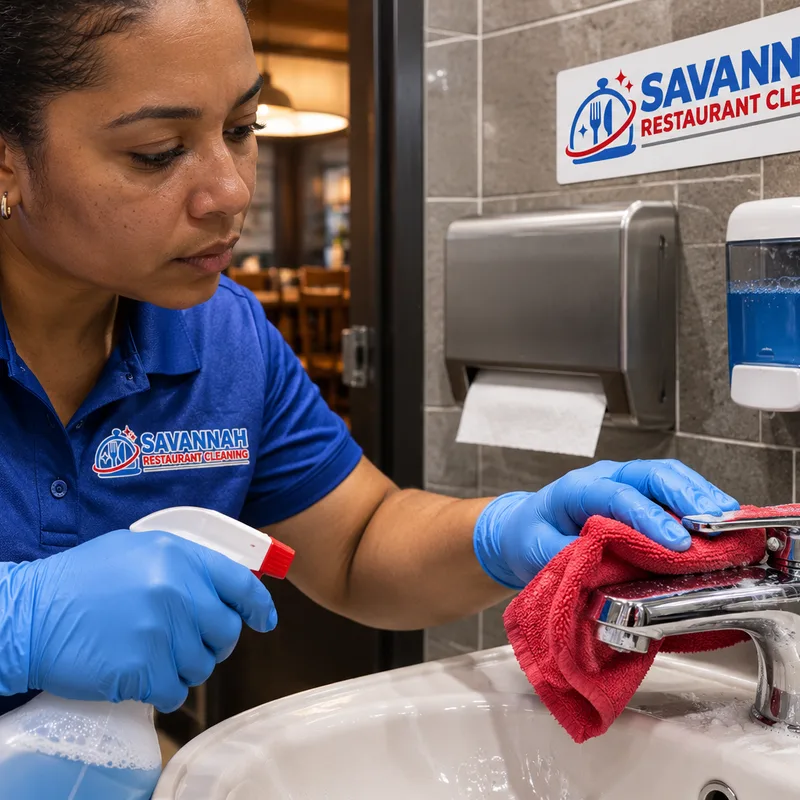
Toilets, urinals, sinks, faucets, and surrounding surfaces are cleaned to remove visible soil, splashes, mineral residue, and soap buildup.
High-Touch Disinfection
Handles, latches, controls, dispensers, and other frequent touchpoints are treated with compatible products and the labeled dwell time.
Odor Source Control
Cleaning focuses on bowls, floor edges, grout lines, drains, trash receptacles, and hidden splash zones instead of masking odor with fragrance.
Floor Care
The floor process is matched to tile, grout, resilient flooring, or other installed material. Wet floor signs remain in place while surfaces dry.
Consumable Checks
A visit can include checking and replenishing customer-supplied soap, tissue, towels, and liners according to the agreed checklist.
Condition Reporting
Managers can be notified about leaks, broken hardware, empty dispensers, or maintenance concerns noticed during cleaning.
Our Process
How We Build a Restaurant Bathroom Cleaning Plan
-
01
Walk Through the Restrooms
We review the number of guest and employee restrooms, fixture counts, floor materials, access, current condition, and any recurring trouble spots.
-
02
Define Duties and Frequency
The written scope identifies routine tasks, periodic detail work, consumable responsibilities, service frequency, and areas that need special product care.
-
03
Choose a Service Window
Cleaning can be planned before opening, after closing, or during a lower-traffic period. The timing accounts for floor drying and uninterrupted access to each restroom.
-
04
Clean to the Agreed Checklist
Technicians follow the defined sequence, use color-coded or restroom-dedicated tools where specified, and avoid moving restroom tools into food-preparation areas.
-
05
Review and Adjust
Managers can report changing traffic, recurring buildup, or supply use. The frequency and detail schedule can then be revised to match actual conditions.
Pooler Scheduling
Restaurant Cleaning in Pooler Requires the Right Timing
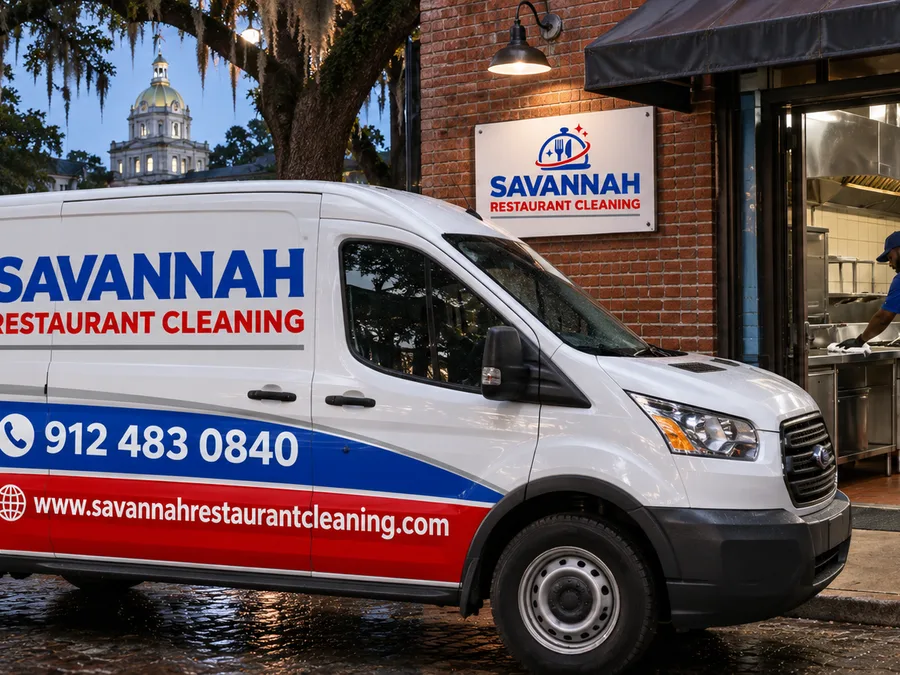
Restroom cleaning must fit the rhythm of the dining room. A full service visit is usually easiest when guest traffic is low and one restroom can be taken out of use safely. If cleaning happens during operating hours, warning signs, controlled access, and dry floors matter. The plan should also account for late closing times, weekend demand, and special events that change normal traffic.
Pooler's warm, humid climate can make moisture control especially important. Wet floors, damp grout, and enclosed trash receptacles can hold odors when they are not cleaned and dried properly. The answer is a repeatable process that removes soil, limits standing moisture, and addresses odor sources directly.
Frequency depends on use. Some restaurants need recurring professional cleaning supported by employee checks during service, while lower-volume dining rooms may need a different schedule. Staff checks and professional visits serve different purposes. Employees can respond to spills and empty dispensers during a shift, while scheduled cleaning provides deeper fixture, partition, floor, and edge work.
Written Cleaning Standards
A Clear Scope Prevents Missed Tasks
Restaurant bathroom cleaning is easier to manage when each responsibility is written down. The scope should identify which restrooms are included, how often they are serviced, which products are supplied, who replenishes consumables, and how periodic work is scheduled. It should also distinguish cleaning from disinfecting. Cleaning removes soil from a surface. Disinfecting uses an appropriate product on a precleaned surface for the contact time stated on its label.
Product compatibility matters. Acidic bowl cleaners should not be mixed with chlorine products, and an abrasive product can damage some metals, plastics, or coated fixtures. Safety Data Sheets should be available for workplace chemicals, and containers should remain properly labeled. These basic controls protect employees, guests, and restroom finishes.
A strong checklist also covers details that guests notice quickly: streaked mirrors, residue around faucet bases, dusty partition tops, full trash bins, and grime at floor edges. Scheduled detail cleaning can address grout, wall splashes, vents, baseboards, and other areas that do not require the same attention on every visit.
Get a written restroom cleaning scope based on your fixture count, business hours, floor materials, and guest traffic.
Call for a Free QuoteFrequently Asked Questions
Restaurant Bathroom Cleaning Pooler FAQs
How often should a Pooler restaurant schedule bathroom cleaning?+
The right frequency depends on guest volume, operating hours, fixture count, and the condition expected at opening and closing. A restaurant near Tanger Outlets Savannah or the airport may experience traffic patterns that differ from a reservation-based dining room. Professional service can be paired with documented employee checks for spills, supplies, and urgent issues during operating hours.
How is restaurant bathroom cleaning priced?+
Pricing is usually based on the number and size of restrooms, fixture counts, service frequency, current soil level, floor type, access, and whether consumable checks or periodic detail work are included. After-hours access and unusual buildup can also affect labor. A walkthrough allows Savannah Restaurant Cleaning to provide a written scope and pricing tied to the actual Pooler location.
Can restroom cleaning be completed while the restaurant is open?+
Yes, service can be scheduled during a low-traffic period when access can be controlled safely. One restroom may need to close temporarily while fixtures are cleaned and floors dry. For Pooler restaurants with long operating windows, before-opening, after-closing, or staggered service may reduce disruption.
Do you refill toilet paper, soap, and paper towels?+
Consumable checks and refilling can be included when customer-supplied stock is available and the responsibility is listed in the scope. The checklist should name each item, identify its storage location, and state who orders replacements. This keeps routine cleaning and supply duties clear for restaurant managers.
What happens if cleaners find a leak or persistent drain odor?+
The issue can be documented and reported to the designated restaurant contact. Cleaning may remove surface soil that contributes to odor, but a continuing sewage smell, slow drain, or active leak may require a licensed plumber or other specialist. Cleaning staff should report the condition rather than conceal it with fragrance.
Are the same tools used in the restroom and food-preparation areas?+
Restroom tools should be dedicated or controlled through a color-coded system to reduce cross-contamination risk. Mop heads, cloths, brushes, and gloves used around toilets should not move into food-preparation areas. The exact tool-control process can be documented during the Pooler location walkthrough.
Can you clean grout and stubborn buildup?+
Yes, periodic detail cleaning can address grout lines, floor edges, fixture bases, partitions, and compatible surfaces with heavier buildup. Results depend on the material's condition, previous chemical damage, and whether discoloration is soil, staining, or failed grout. A pre-service inspection helps set the appropriate method and realistic expectations.
Plan Your Service
Put a dependable restroom cleaning plan in place
Tell Savannah Restaurant Cleaning about your Pooler restaurant, operating hours, restroom layout, and current concerns. We will help define a practical scope that keeps the space ready for guests and staff.