
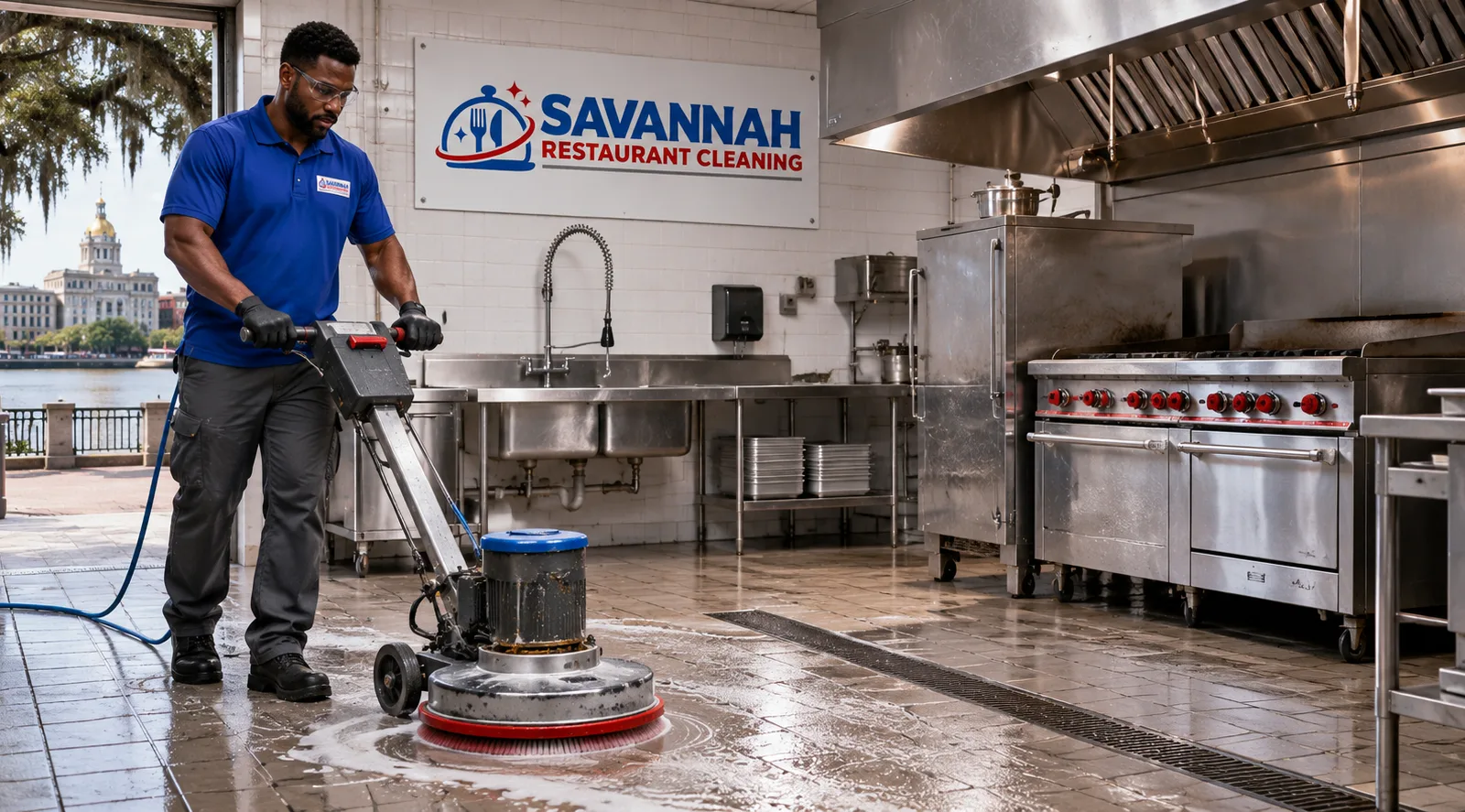
Restaurant Floor Care · Savannah
Commercial Kitchen Floor Cleaning
Remove built-up grease, food residue, and soil from restaurant tile and grout with a cleaning plan fitted to your kitchen and operating schedule.
Kitchen Floor Care
Grease Removal for Working Restaurant Kitchens
Commercial Kitchen Floor Cleaning addresses the film that routine mopping often leaves on tile, grout, edges, and traffic lanes. Cooking oils combine with food particles and tracked-in soil, then settle into porous grout and textured tile. Reusing dirty mop water can spread that residue across the floor instead of removing it.
Savannah Restaurant Cleaning provides scheduled and one-time floor cleaning for commercial kitchens. Our team plans the work around access, floor condition, equipment placement, and the hours when your kitchen can be taken out of use. The goal is a properly degreased, thoroughly rinsed floor that is ready for staff when the agreed drying period is complete.
Savannah's heat and humidity can lengthen drying when airflow is limited, so ventilation and timing matter. Kitchens serving the Historic District also may have tight delivery windows, compact work areas, and limited equipment access. Restaurants near River Street can face similar access constraints, while larger operations around Midtown may have broader production areas that need to be cleaned in stages. Those practical details belong in the scope before work begins.
Tile and Grout
Restaurant Tile and Grout Need More Than a Mop
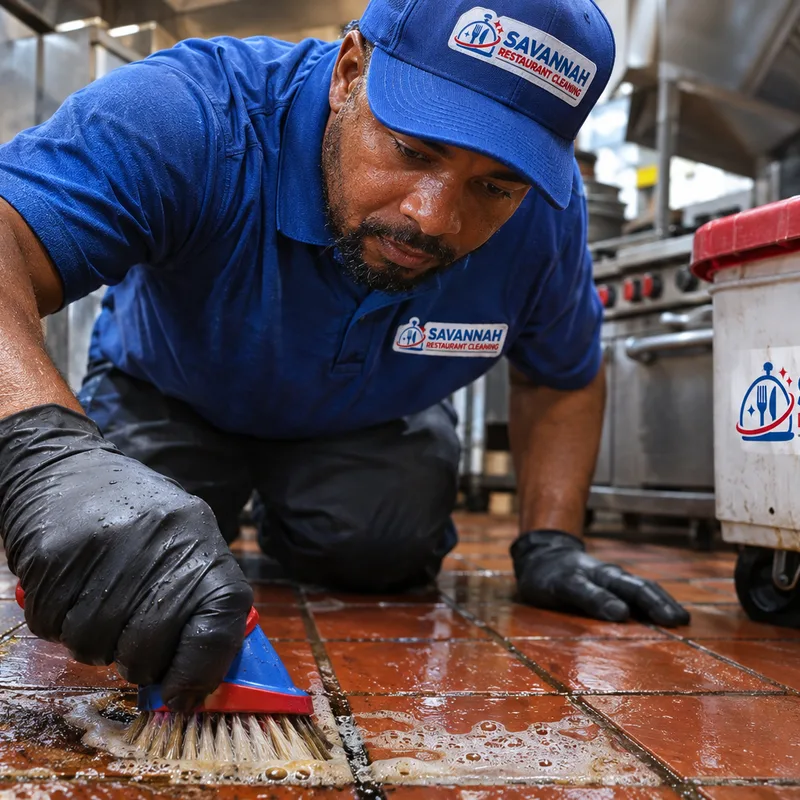
Restaurant tile cleaning starts with identifying the floor material and the soil. Quarry tile and ceramic tile are common in commercial kitchens because they tolerate heavy use, but grout joints are porous and collect grease. Textured surfaces also hold residue in low points where a flat mop has limited contact.
Kitchen floor degreasing uses a compatible alkaline cleaner, dwell time, controlled agitation, and soil extraction. The solution needs enough time to loosen greasy buildup without drying on the surface. Agitation reaches textured tile and grout lines, while wet recovery removes suspended soil. A final rinse reduces cleaner residue that could otherwise leave the floor sticky and attract more dirt.
Floor drains, thresholds, wall edges, under-equipment areas, and transitions into dishwashing or storage spaces need individual attention. Heavy deposits may require repeated treatment rather than an overly aggressive chemical application. We avoid one-method-fits-all cleaning because painted surfaces, metal equipment, damaged grout, and some specialty flooring can react differently to heat or high-pH products.
Cleaning Scope
What Restaurant Floor Cleaning Services Can Cover
Kitchen Floor Degreasing
Treatment for cooking grease, tracked soil, and sticky residue in cook lines, preparation areas, and other production zones.
Restaurant Grout Cleaning
Targeted agitation and extraction for grout joints where darkened grease and food soil resist ordinary mopping.
Edges and Equipment Perimeters
Detail cleaning around accessible equipment legs, thresholds, base edges, corners, and floor-to-wall transitions.
Dish and Utility Areas
Cleaning for compatible hard floors around dishwashing stations, utility sinks, and routes where water and residue are frequently tracked.
Dining and Service Floors
Hard-surface cleaning can be coordinated for service lanes, beverage stations, and compatible tile outside the kitchen.
Recurring Maintenance
A planned schedule can target buildup before it becomes difficult to remove, with frequency based on cooking volume and floor condition.
Our Process
Our Commercial Kitchen Floor Cleaning Process
-
01
Inspect the Floor and Access
We review the flooring material, grout condition, grease level, drains, equipment clearances, water access, and the kitchen's available shutdown window. Damaged grout, loose tile, and sensitive nearby surfaces are noted before cleaning.
-
02
Prepare the Work Area
Loose debris is removed, movable items are cleared by agreement, and nearby surfaces are protected as needed. The work is sequenced so cleaning does not interfere with active food preparation.
-
03
Apply the Degreaser
A cleaner compatible with the floor and soil is applied at an appropriate dilution. Controlled dwell time allows the product to break up oily deposits before agitation begins.
-
04
Agitate Tile and Grout
Commercial scrubbing equipment and detail tools work the tile texture, grout joints, edges, and accessible tight areas. Heavily loaded zones may receive another pass.
-
05
Recover and Rinse
The loosened grease, cleaning solution, and soil are recovered rather than pushed toward an untreated area. Rinsing removes remaining cleaner and helps prevent a tacky finish.
-
06
Review and Allow to Dry
We review the cleaned areas and discuss any permanent staining, damaged grout, or deposits that need further treatment. Staff should keep off the floor until it has dried sufficiently for safe use.
Savannah Scheduling
Restaurant Floor Cleaning in Savannah That Fits Operations
A useful cleaning plan accounts for how the kitchen actually runs. Prep periods, deliveries, closing duties, overnight access, and reopening times all affect scheduling. Before work, we define which equipment can be moved, who is responsible for moving it, and how much drying time the floor will have.
Historic buildings may have narrow entries, uneven transitions, or utility layouts that limit the equipment brought into a kitchen. A restaurant in the Starland District may combine an older commercial space with a compact kitchen, while a location near City Market may need work planned around pedestrian activity and service hours. These conditions change setup and sequencing, not the standard of cleaning.
Restaurant floor degreasing is also different from correcting failed materials. Cleaning can remove removable soil, but it cannot rebuild eroded grout, reset loose tile, repair a leaking drain, or restore a surface etched by the wrong chemical. We point out visible maintenance issues so the floor's condition is understood before recurring service is planned.
Choosing a Service
What to Look for in Commercial Floor Cleaning in Savannah
Ask how the cleaner will identify your floor material, choose the chemical, control dwell time, agitate grout, and recover dirty solution. A vague promise to pressure wash everything does not address chemical compatibility, overspray, electrical equipment, or areas where water should not be forced.
The written scope should identify the included rooms, approximate floor area, movable items, excluded repairs, access arrangements, and expected drying window. It should also distinguish a restorative first cleaning from recurring maintenance. A heavily loaded floor often takes more time initially; later visits can focus on preventing the same level of buildup.
Cleaning should support, rather than replace, the restaurant's daily floor-care procedures. Staff still need to remove spills promptly, use clean solution, change mop water when it becomes loaded, and follow the floor-product manufacturer's instructions. Slip resistance depends on the flooring, footwear, contamination, cleaning residue, and whether the surface is wet. No cleaning method makes every floor slip-proof.
Get a written scope based on your floor material, grease level, access, and operating schedule before cleaning is placed on the calendar.
Call for a Free QuoteFrequently Asked Questions
Commercial Kitchen Floor Cleaning Questions
How much does commercial kitchen floor cleaning cost in Savannah?+
Pricing depends on floor area, buildup, flooring type, equipment access, and whether the work is a first deep cleaning or recurring maintenance. A compact kitchen with clear access requires a different scope than a large cook line with heavy deposits and extensive grout. An on-site review is the soundest way to confirm the included areas and price.
Can restaurant floor cleaning be scheduled after closing?+
Yes, work can often be planned for a shutdown period when the kitchen is empty and food preparation has ended. The schedule must include setup, degreasing, recovery, rinsing, and drying time. Savannah kitchens with limited overnight airflow may need additional drying time before staff return.
Will kitchen floor degreasing remove every dark grout line?+
Degreasing removes removable oil and soil, but it may not remove permanent discoloration, worn grout, chemical damage, or stains beneath the surface. A test area can help separate cleanable buildup from material damage before the full restaurant grout cleaning begins.
Do we need to move kitchen equipment before service?+
Movable racks, mats, bins, and small items generally should be cleared according to the agreed preparation plan. Fixed or connected cooking equipment may stay in place, with accessible perimeters cleaned. The scope should state who moves each item so crews do not disconnect gas, water, or electrical equipment without proper authorization.
How long does a restaurant kitchen floor take to dry?+
Drying time varies with flooring texture, grout condition, ventilation, indoor humidity, and how much water the job requires. Mechanical recovery removes much of the liquid, but the kitchen should remain out of use until the floor is sufficiently dry. Savannah's humid conditions can slow evaporation where airflow is poor.
How often should restaurant tile cleaning be scheduled?+
The right frequency is based on cooking volume, grease exposure, floor texture, daily mopping practices, and how quickly grout darkens or the floor becomes tacky. High-output fry and grill lines may need targeted degreasing more often than low-grease preparation areas. An initial cleaning provides a practical baseline for setting the maintenance interval.
Can you clean while the restaurant kitchen is operating?+
Deep degreasing should be performed when food preparation has stopped and the work zone can be controlled. Cleaning around active cooking introduces traffic, contamination, hot-surface, and wet-floor concerns. Staged work may be possible in larger facilities if each area can be fully separated from kitchen operations.
Get a Clear Scope
Plan a Cleaner Kitchen Floor
Tell Savannah Restaurant Cleaning about the floor material, problem areas, kitchen size, and available service window. We will help define a practical scope for one-time degreasing or recurring floor care.